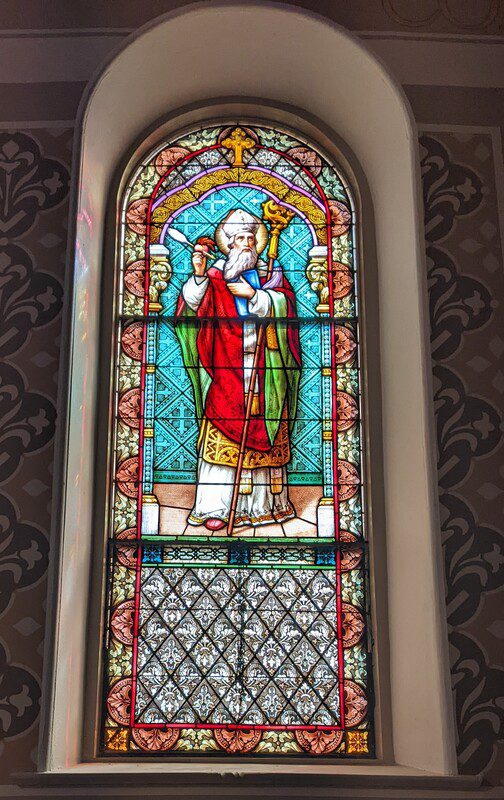
St. Augustine, Bishop and Doctor of the Church, depicted holding a flaming heart, which symbolizes his restless desire for God, a theme of his writings: “You have made us for yourself, O Lord, and our heart is restless until it rests in you.” The arrow represents the Word of God, which pierces and directs the restless heart.
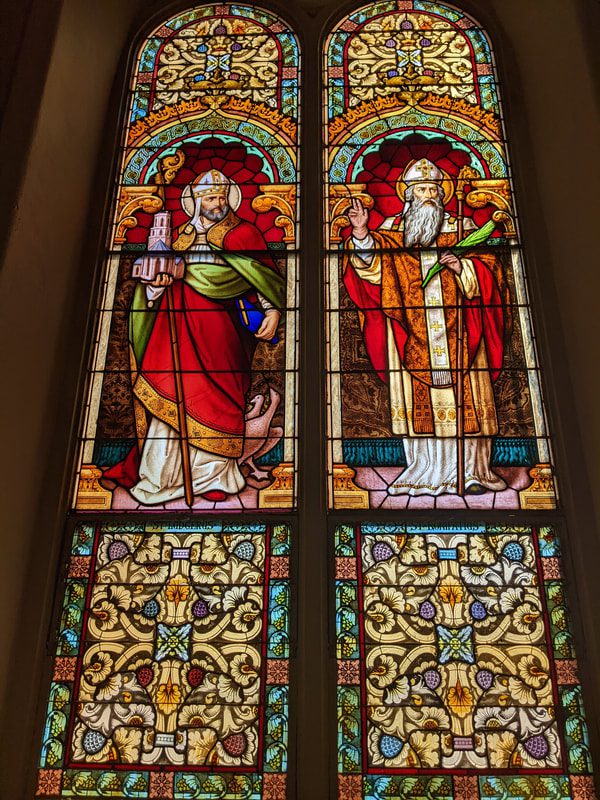
St. Ludger was a German bishop who built churches. He preached on the frontiers where he made a large number of converts and destroyed pagan shrines. He was also sent as a missionary to the province of Westphalia.
St. Boniface is known as the Apostle of Germany. The Germans believed that their god, Thor, resided in a sacred oak tree. Boniface chopped the tree down and began to preach Christianity. The huge tree crashed, splitting into four parts. The people had expected judgment to descend upon Boniface. The acknowledged that their gods were powerless. Boniface founded monasteries and churches and spread the faith. He died in 754 and is buried in the monastery at Fulda, Germany.
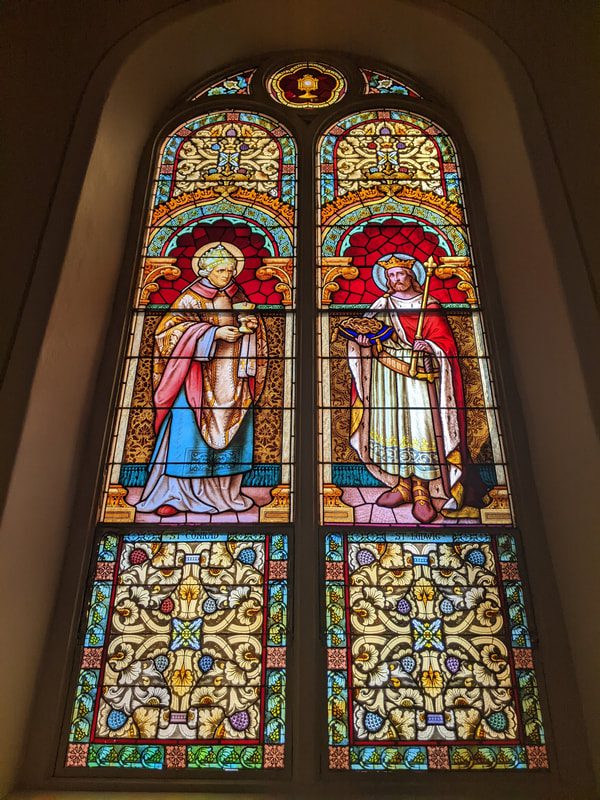
St. Conrad is pictured with a chalice and spider. A large spider, thought to be venomous, dropped into the chalice as he was celebrating Mass. Out of devotion to the Eucharist, Conrad swallowed the spider and suffered no harm.
St. Louis IX was king of France. He lived from 1214-1270 and led two crusades to the Holy Land, from where he brought back to France important relics, including the crown of thorns. He is the patron of the city and archdiocese of St. Louis, of which St. Joseph was once part.
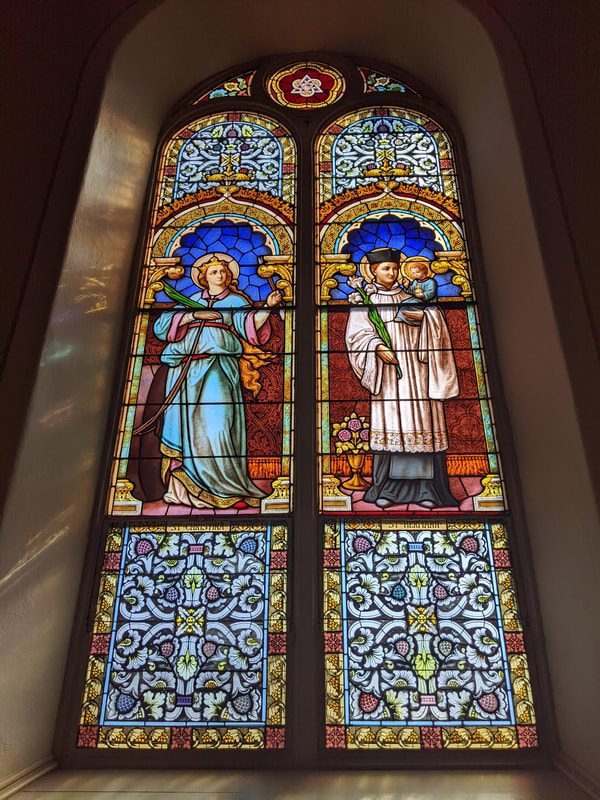
St. Christine was a third-century martyr who was tortured by being fastened to a rack. She survived the fire lit under the rack and was then shot through with arrows.
St. Herman Joseph was born in 1150. He is depicted holding the child Jesus and lilies.
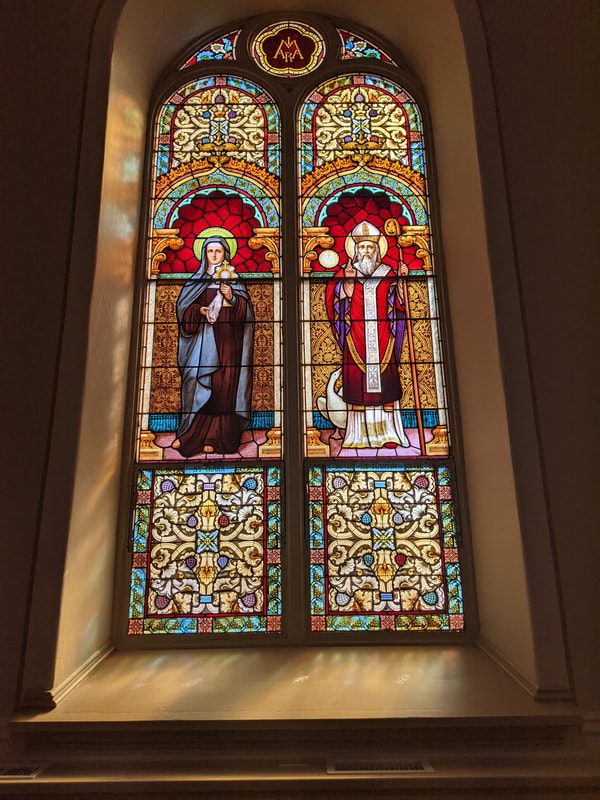
St. Clare was the founder of the Poor Clare Sisters. When her convent was under attack, she took the Blessed Sacrament and held it up, causing her enemies to flee.
St. Martin of Tours was a former Roman soldier who became a Christian and eventually a bishop. He saw a poor man shivering from cold and cut his military cloak to give a portion to him. That night he had a dream in which Jesus was wearing the cloak saying, “My friend, Martin, gave this to me.”
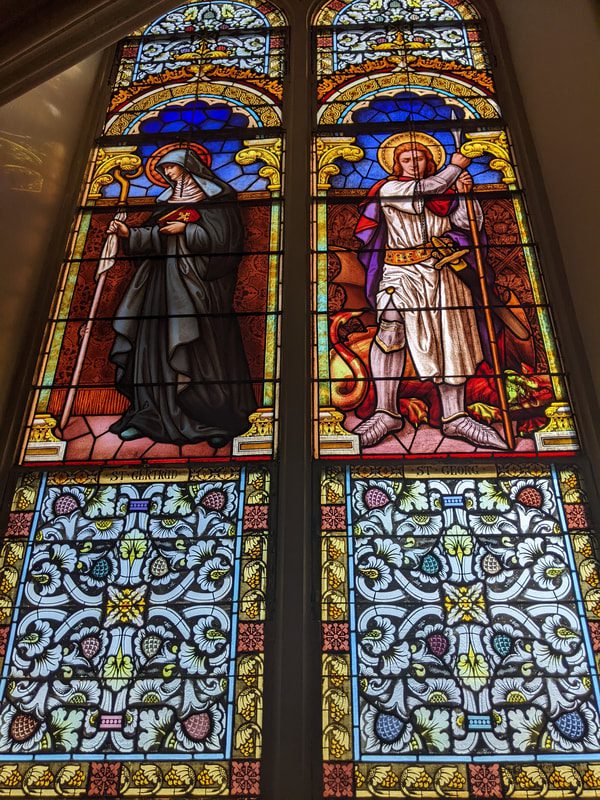
St. Gertrude was born in 1256 in Saxony (modern-day Germany). At the age of five, she was placed in a Benedictine monastery at Helfta, where she eventually became a nun. She loved to study Latin and philosophy.
There are few confirmed facts about the life of St. George, known as the Dragonslayer. He is believed to have been born in Anatolia (modern-day Turkey) in the 200s and to have served in the Roman army.
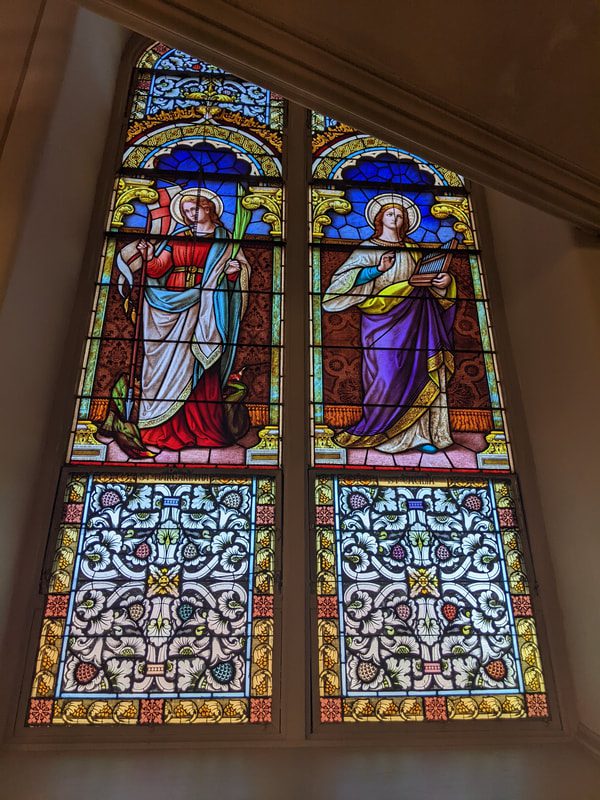
St. Margaret was the daughter of a pagan priest of Antioch, though the exact dates of her life are unknown. Upon discovering Margaret’s conversion to Christianity, her father cast her out from the family home and she was thrown into prison.
St. Cecilia was born to a noble Roman family in the mid-late second century. As a girl, she made a private vow of virginity, though her parents arranged for her to marry a man named Valerian. As the musicians played at their wedding, Cecilia sang to God in her heart. On their wedding night, Cecilia told Valerian of her vow and he was soon convinced to become a Christian. After several unsuccessful attempts, she was finally martyred. Today she is the patroness of musicians.
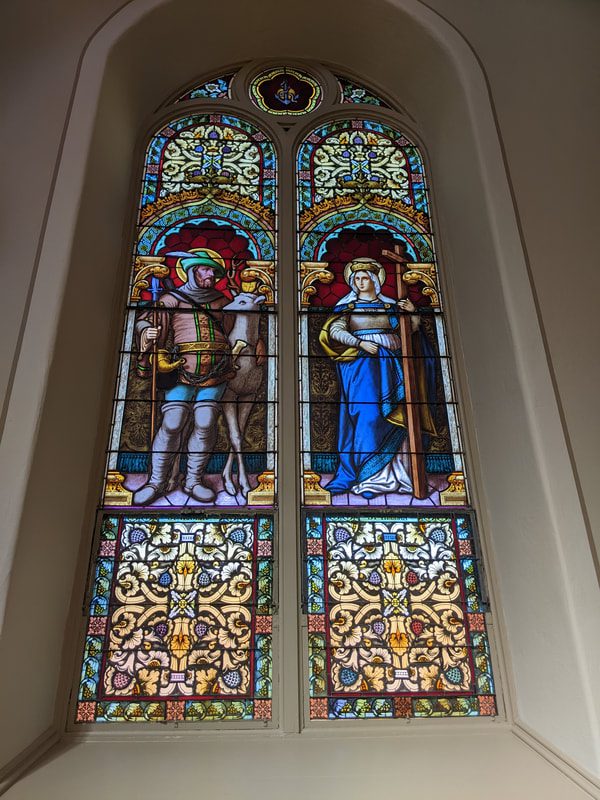
St. Hubert was a nobleman of seventh-century Belgium. He was out hunting on Good Friday (a day of penance and abstinence from meat) when he saw a white stag with a shining cross between its antlers. The stag spoke to him, saying that
unless he changed his ways, he would be destined for hell. Hubert gave up his lands and title and became a priest under the Bishop Lambert.
St. Helena was the mother of the Roman Emperor Constantine. After Constantine’s ascension to the throne, Helena became
a Christian and urged her son to issue a decree ending all persecution of Christians in
the empire. Her urging, combined with his miraculous victory over Maxentius, which
he credited to a miraculous vision of the cross, caused him to end Roman persecution of the Christians. He also bestowed upon Helena the title of Empress, though she continued to live an austere, penitential life. Helena also made a pilgrimage to the Holy Land and unearthed the remains of the cross on which Jesus died.
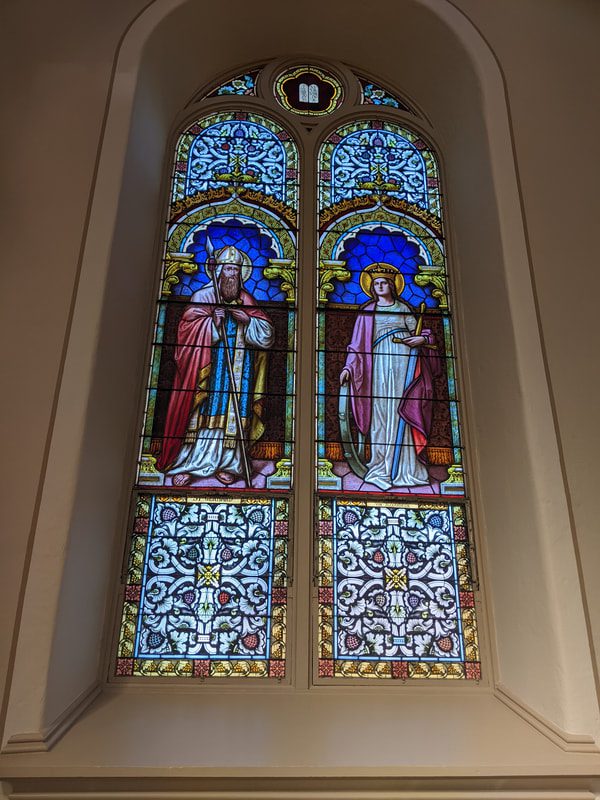
St. Gerard Sagredo was born in Venice in the late tenth or early eleventh century. He joined the Benedictines as a young man but later left the monastery to make a pilgrimage to Jerusalem. On his way home, he traveled through Hungary, where he was hired by the king, St. Stephen I, to tutor the young prince. Gerard developed a reputation as an eloquent preacher and soon became the first bishop of Csanád, where he converted many of the locals.
St. Catherine was the daughter of a Roman nobleman in Alexandria, Egypt. She became a Christian after receiving a vision. After speaking out against the persecution of Christians by Maxentius, she was first offered a royal marriage if she denied her faith, and, when she refused, was arrested. While imprisoned, she converted Maxentius’s wife and two hundred soldiers, whom Maxentius executed before sentencing Catherine herself to death on a device called the Breaking Wheel. However, the wheel itself broke, and she was beheaded in the year 305.
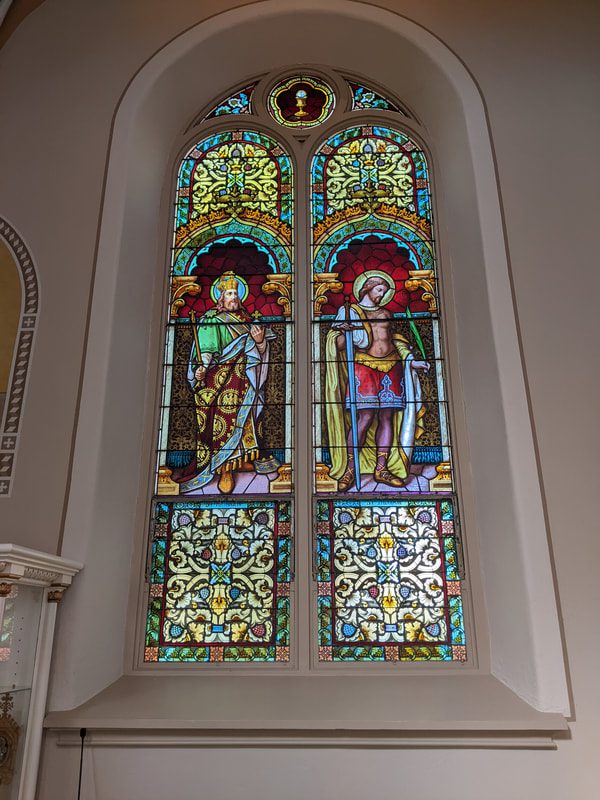
St. Henry II was born in 973 to the Duke and Duchess of Bavaria. Personally tutored by St. Wolfgang, Bishop of Ratisbon, Henry succeeded his father in 995, and in 1002 was elected emperor. His reign was marked by many victories over the enemies of Christendom, zealous promotion of monastic life, and frequent donations to the Church.
St. Theodore was a soldier from Euchatia in Asia Minor (central Turkey) in the early fourth century. He became famous for his eloquent speech, abundant virtue, and handsome appearance. He was eventually promoted to general and used his position to spread Christianity to those under his command.
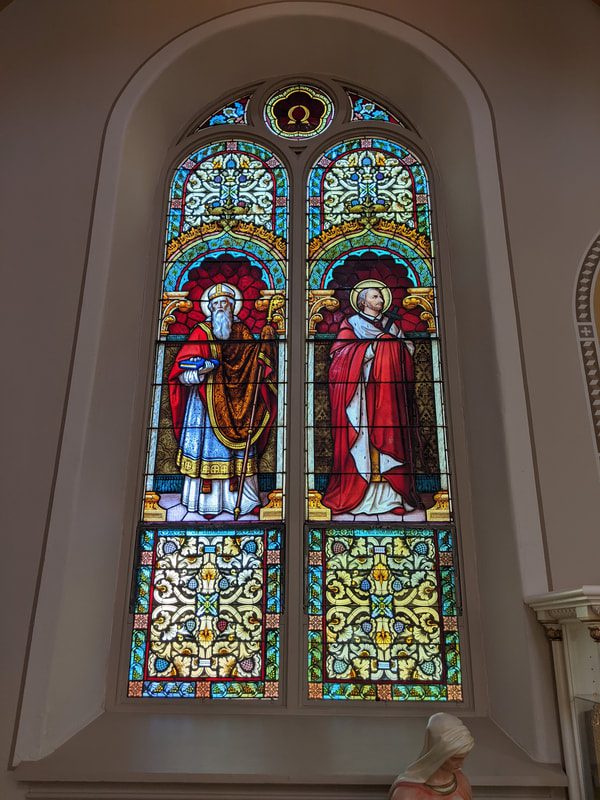
St. Liborius was born to a noble family in Gaul around the year 348. As a young man, he became a priest and was quickly elevated to Bishop of Le Mans, where he ministered for 49 years. During that time, he is said to have ordained 217 priests and 186 deacons and built several churches in the area surrounding Le Mans.
St. Charles Borromeo was born in 1538 to Count Gilbert Borromeo and Margaret de Medici near Lake Maggiore in Italy. When he was only twenty-two, his uncle, the Cardinal de Medici, was elected Pope, taking the name Pius IV. He bestowed on Charles the title of Cardinal and made him Archbishop of Milan. Having recently received degrees in civil and canon law from the University of Pavia, Charles quickly set to work reforming the churches under his jurisdiction and, in 1562, after receiving the title of Papal Secretary of State, he assisted his uncle in reconvening the Council of Trent and composed the accompanying Catechism.
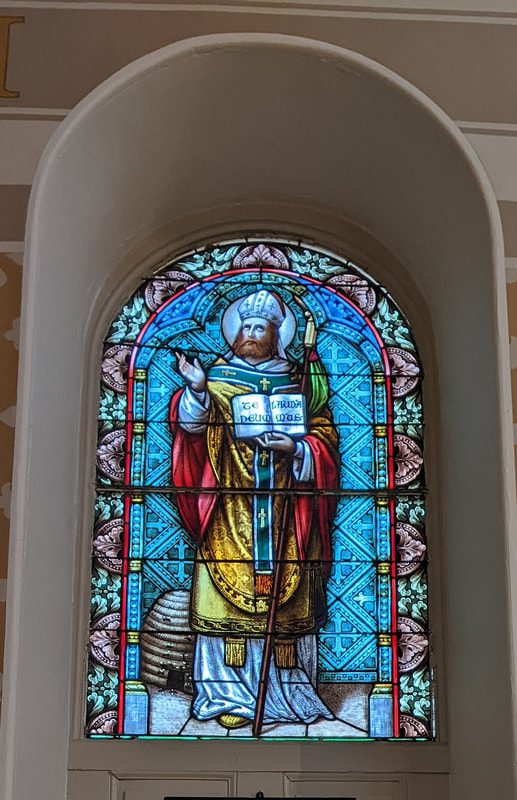
St. Ambrose was born in Gaul around 340. His father, a Roman prefect, died while he was still an infant, so his mother brought him back to Rome, where he was raised and educated, developing considerable skill in poetry and public speaking. As an adult, he moved to Milan, where he became governor. In 374, the Bishop of Milan died, and there were two main candidates to replace him. Ambrose mediated a riot between the two sides and the people cried out for Ambrose himself to become the new bishop. As Bishop of Milan, Ambrose helped to eliminate the heresy of Arianism by composing hymns extolling the divinity of Christ. Here he is depicted holding an open book with the words “Te Deum Laudamus,” (“God, We Praise You”), the opening of a hymn traditionally attributed to him and Augustine. He stands by a beehive. According to legend, when he was a baby, a swarm of bees landed on him and crawled about on his body, even his mouth, without stinging him. This was taken to be a sign that he would be a “honey-tongued” public speaker. Ambrose also wrote about bees as a metaphor for the Church, in which everyone has a part to play and ought to work together for the good of all.