This page is still being updated.
St. Joseph Parish is looking at the following big maintenance and capital improvement projects:
Pipe Organ Repairs
Proposals
There are two possible proposals for the pipe organ:
| Level 1 (basic repairs) – $124,842.00 | Level 2 (basic repairs plus improvements) – $261,908.00 |
| Remove the pipework Remove all magnet boards and return to shop Refresh the chest magnets by oiling hinges Remove the console components and return to shop Provide new custom manual keys and pedal keys Provide new stop rail with new solid-state stop keys engraved to match the specification. Provide new LED music rack light Provide new console control system Provide new combination action with 10 General Pistons, 5 Divisional Pistons for Swell and Great, General Cancel, and Set Piston Provide new solid-state drivers for pipes Provide new fuses for returns Remove all Double-Cotton-Covered (DCC) wire Install all new PVC wire to magnets and console components Wire console and chamber components to standards set in National Electrical Code Provide a new electric expression motor Install all new equipment Remove the façade pipes Return the facade pipes to the pipe maker Repair and repaint the façade pipes Return and install the facade pipes Reinstall the pipework Tune entire instrument Provide demonstration and basic training of the new control system to the parish organists | Everything from level 1, plus: Complete rebuilding of the organ Raise the case and chests up an additional 3ft (giving the organ the proper height to speak over the choir in the loft) Add four additional ranks to the organ for greater color and volume options |
How could this be funded?
St. Joseph has agreed to do at least the level 1 repairs in order to address the safety concern and prevent further major degradation to the organ. If there are additional donations or possibly through a future fundraiser / capital campaign, it could be possible to do the level 2 expansion as well.
Sources of level 1 funding include: $20,000 in grant money; private donations; existing capital improvements funds. Nothing has been paid yet.
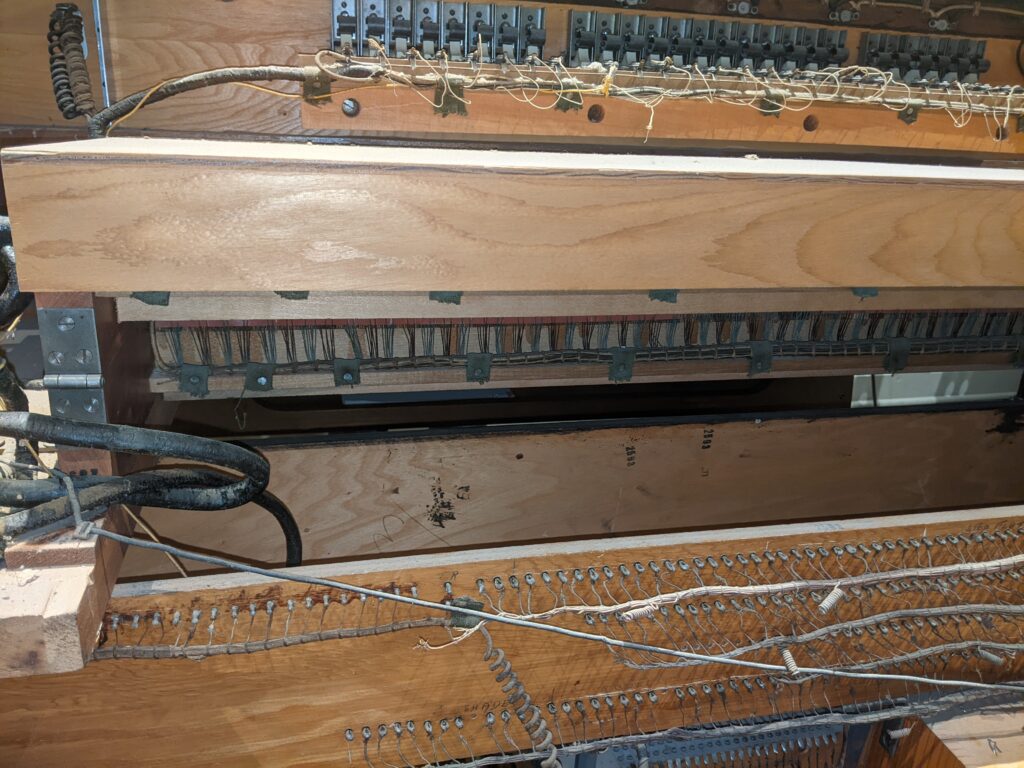
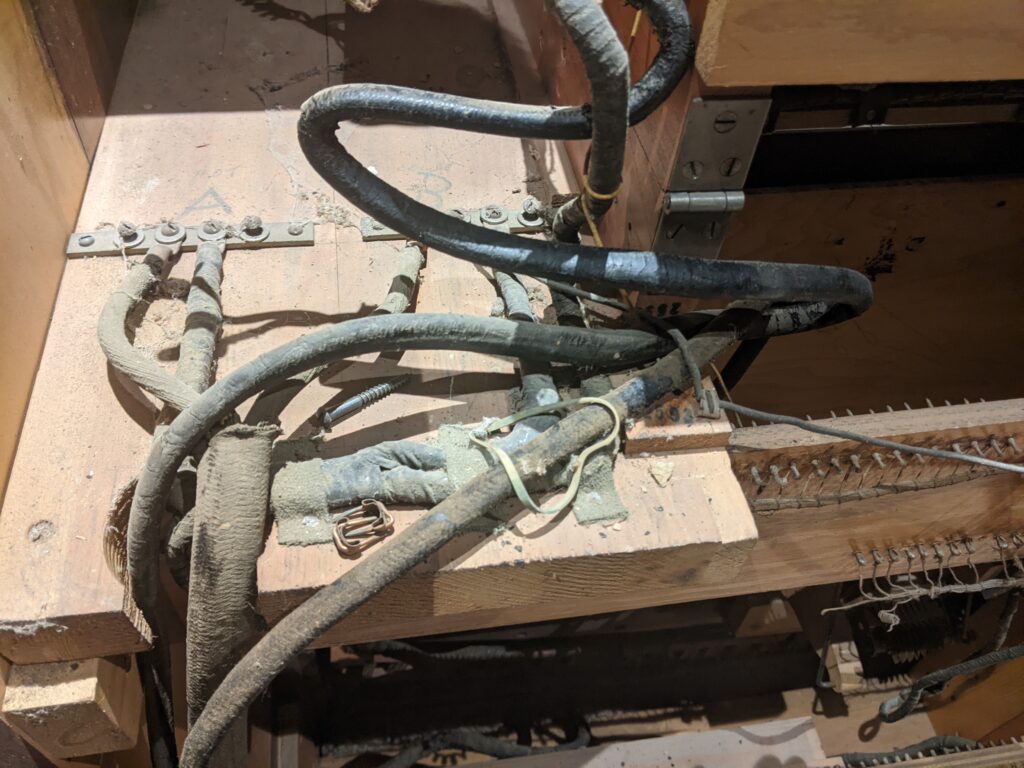
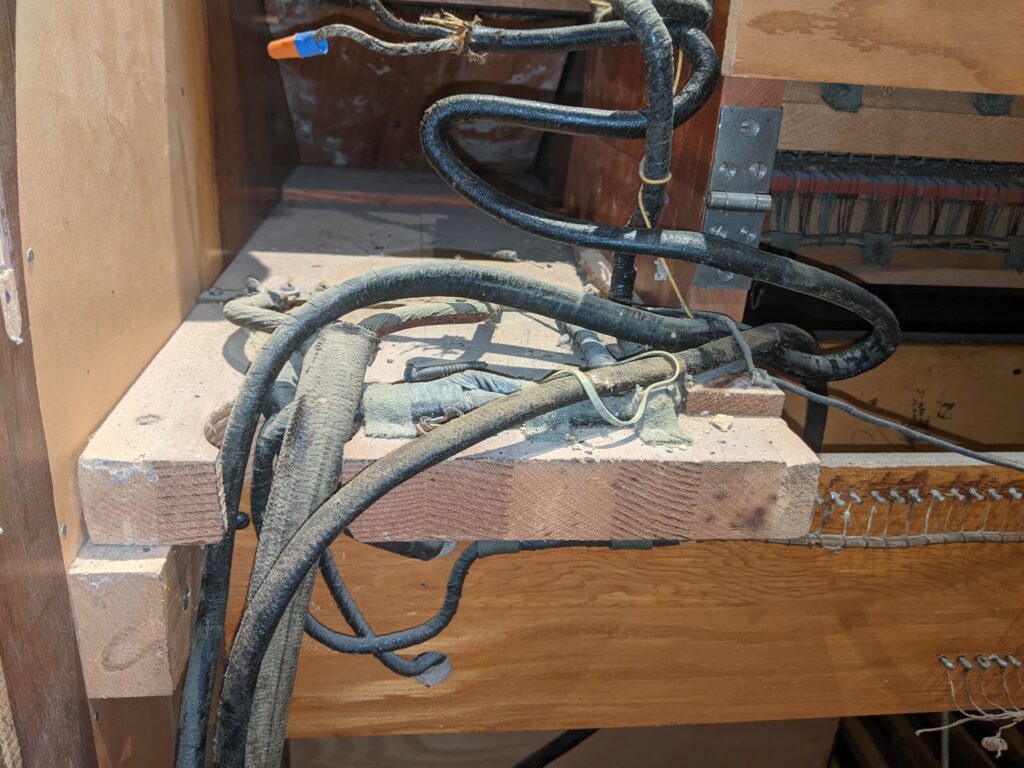
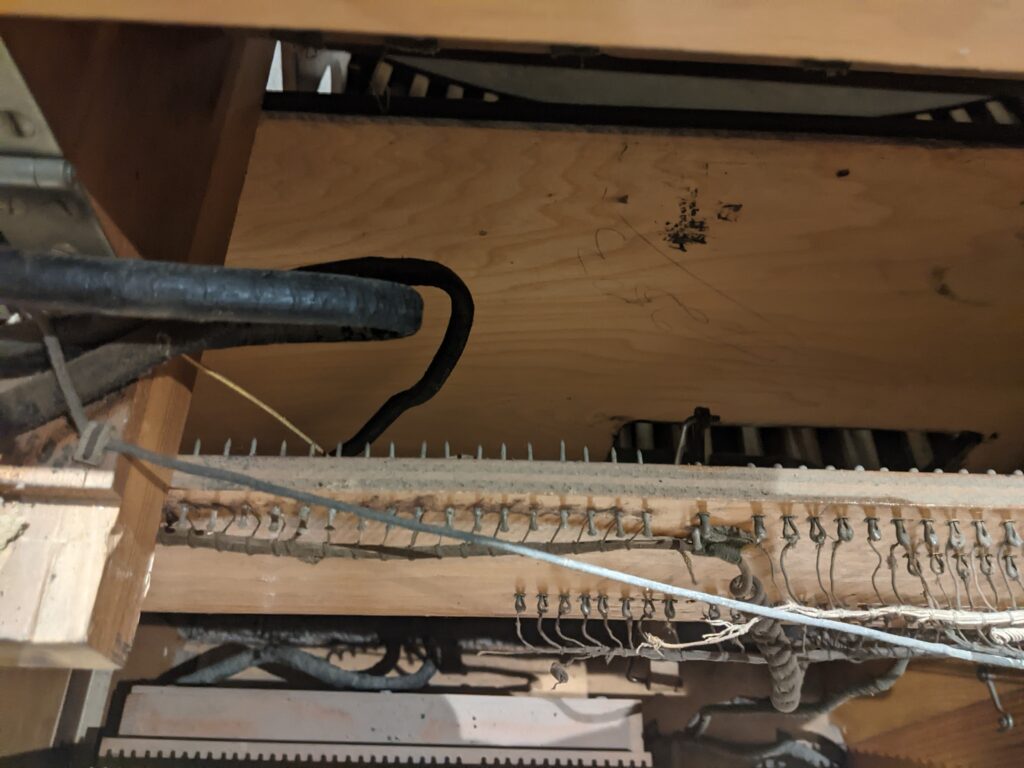
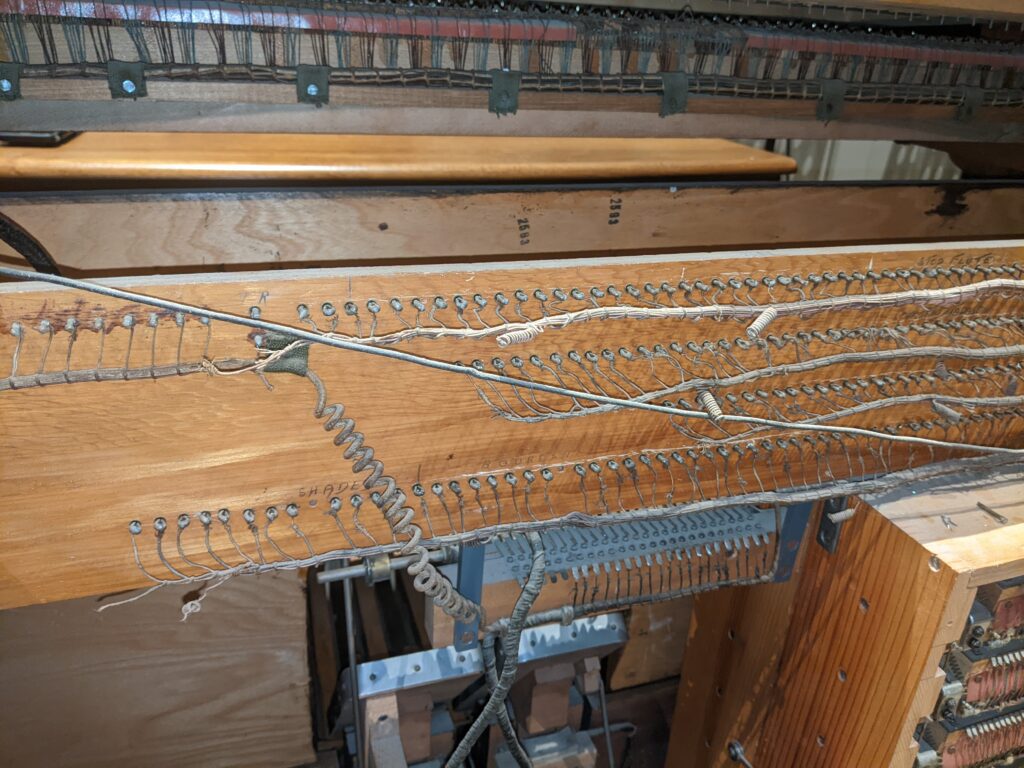
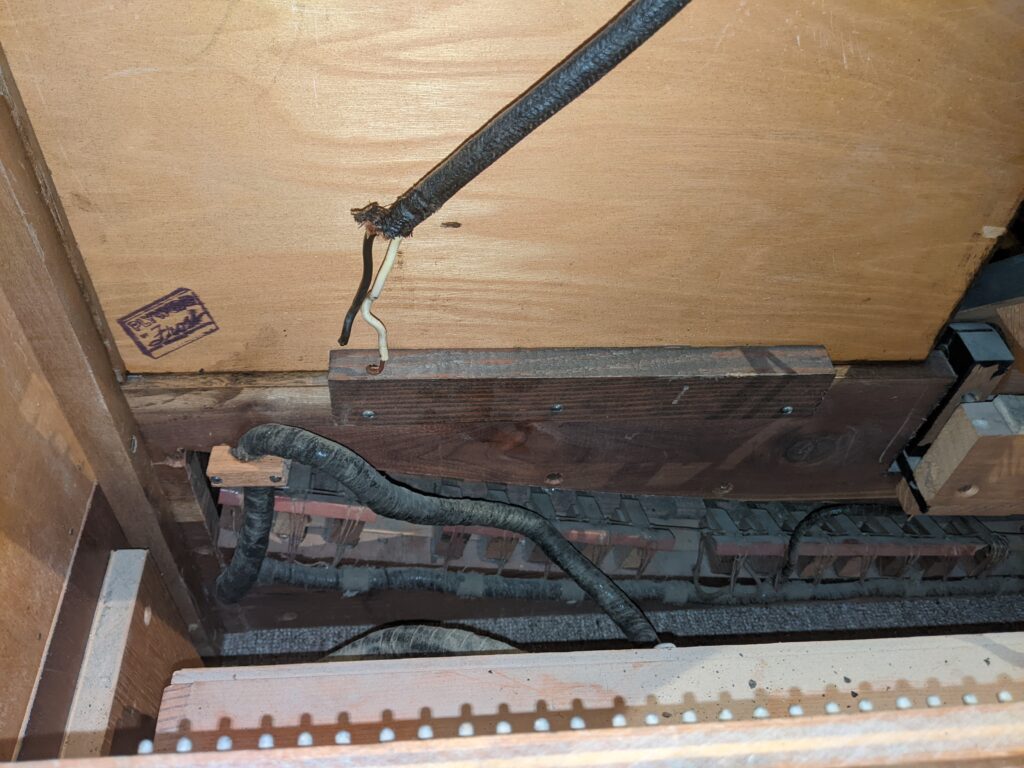
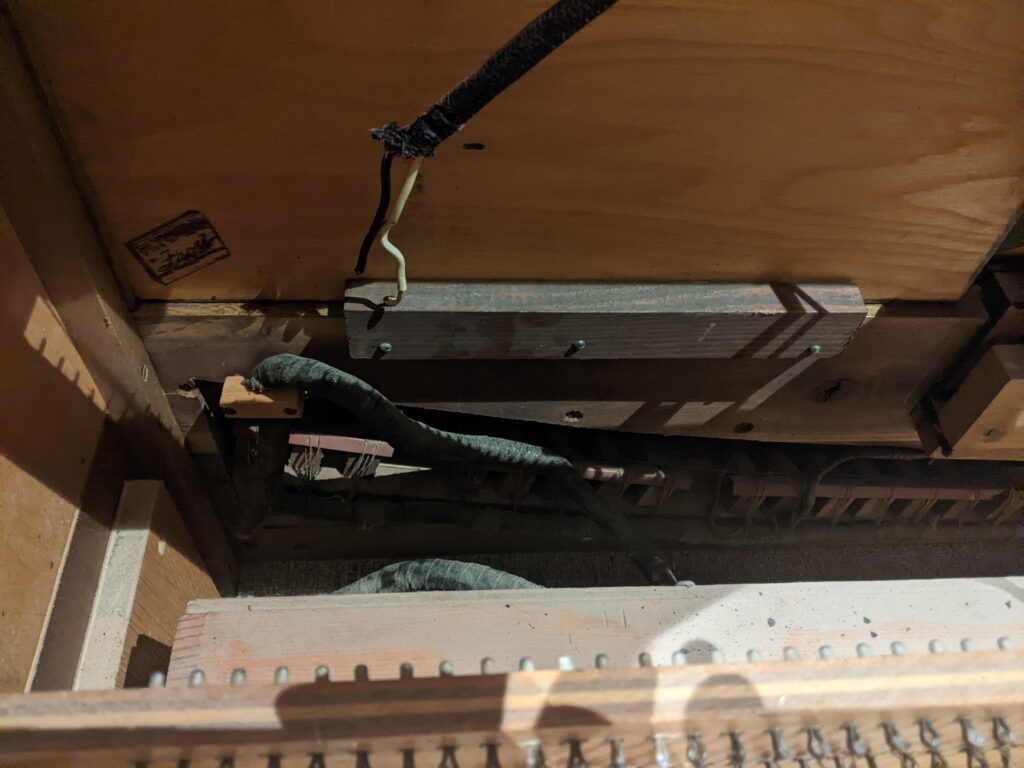
Photos of Current Pipe Organ Console Interior
Reasons for the Pipe Organ Improvements
Structural Deterioration
Interior of the organ pipes are showing disintegration. The organ contains two different sets of vintage
pipes; one from the original set (good possibility that they were made by J.G. Pfeffer and Sons Organ Company
of St. Louis that existed from 1890-1910) and the additional set that was added in 1946 (records show that
these were made from a combination of pipes from the parish organ and other pipe organs that were
melted down and repurposed into pipes). The last refurbishment of the parish pipe organ was completed in
1946. At that time, no new metal was allotted for non-essential items due to the WWII effort, which is why
pipes had to be melted down to make new pipes. At the time clock faces were used to make the slides that
pipes need so the correct tune can be conveyed by each pipe. (Again, this was a necessity due to the WWII
effort still being in place). The clock faces that are inside the present pipes are degenerating the present
pipes. The current pipes are all in good quality at this time, but they will have to be replaced in the future if
the clock faces are not removed to save the pipes. It has been mentioned that our parish organ does contain
high-quality pipes, and as well, few organs today have J.G. Pfeffer pipes. These pipes will be lost if the organ is
not restored.
Safety Concerns
The wiring in the current organ manual(keyboard) is from 1946. The wiring is in a very perilous state: very
outdated, fragile looking and containing some wires that have lost their insulation due to mice. Restoration
will replace the current wiring, return the electrical components of the organ to safety and result in the wiring
meeting the standards of National Electric Code.
Historical
St. Joseph Church was placed on the National Register of Historical Places in April of 1972. The pipe organ is
part of the church’s structure and needs to be updated and restored so it can continue to serve the parish in
the way it was intended. The beautiful and historical cross that is positioned on the top of the case that
houses the pipes is wobbly and definitely needs to be resecured. The beautiful walnut wood that encases the
pipes is thought to contain original wood from the first organ in the church and needs to be preserved.
Aesthetics
The façade pipes no longer match the church’s interior trim. The trim in the church after the latest
renovation is now gold, but the façade pipes are bronze. The restoration will involve painting of the façade
pipes to match the trim of the church.
Future Needs of the Parish
The expression pedals (control volume and fullness) do not function properly and some keys are muted with
specific stops. Many organists are finding it too frustrating to use the pipe organ. Restoration will improve
the organ’s functionality.
Embracing Current Technology
The restoration would add a transposer to the organ when the wiring is updated. At one time, this would
have been an expensive addition ($15,000). This will come at no extra cost with updating the wiring in the
organ. The current organ lacks the necessary tonal quality and has little musical variety. Both the tonal
quality and variety of the sounds that the organ produces can be improved with modern technology while
still maintaining the historical aspect of the organ. The visible part of the organ will remain unchanged.
Stained Glass Window Re-Leading
In the last church renovation, the upper-level stained glass windows were re-leaded and re-set. The main-level windows were not done. This preventative maintenance is needed to keep the windows safe long term. There is no specific time line on how urgent it is. Several windows show signs of the glass bowing based on the most recent inspection (October 2026).
Photos and details forthcoming.
Proposal
| Estimated Cost (as of 2025, will be updated) – $736,397.00 |
| Removal of Stained Glass: Prior to removal, all stained glass in this proposal scope will be photographed and labeled. Templates and sizes for each stained-glass panel removed will be taken. Conrad Schmitt Studios will transport the stained-glass panels to their studio location in New Berlin, Wisconsin. Documentation: Additional photographs and rubbings will be created for each panel. Documentation will include any mismatched or damaged glass, or any unusual or unexpected aspect of the window’s condition. Each rubbing will also include information concerning lead came sizes and profiles used as well as bar locations. De-leading: The art glass will be dismantled from the lead matrix, cleaned and any putty removed. This process will necessitate the use of a water tank to control lead dust. Conrad Schmitt Studios will properly dispose of hazardous wastewater and recycle the dismantled lead. If requested, CSS will provide a waste manifest recording the proper disposal and tracking of the lead waste from the project. Broken and Miss-Matched Glass: All broken pieces of glass shall epoxy mended. Joined with mending leads or replicated as appropriate per client preference. Re-Leading: Each panel will be re-leaded with new lead matrix that matches the original profiles. An alloy lead came will be used for all re-lead and lead repair work. All lead cames will be soldered at the joints using 60% tin, 40 % lead solder. Cementing: Grout all panels on both sides with a linseed oil based putty (no Portland cement is to be used). Reinforcing Bars: Conrad Schmitt Studios will provide new reinforcing bars to the interior face of the stained glass. Bars will be oriented horizontally to provide lateral bracing as well as weight distribution vertically. Bars will be bent where needed to avoid running through faces. Flat bars soldered directly to the panels or round-bars with copper ties will be used per client preference. Installation: The restored stained glass will be installed into the existing frames. |
How could this be funded?
Funding for the stained glass window re-leading could come from: money on-hand that was raised during the 2019 capital campaign, a new capital campaign, private donations, grants, other fundraising. Nothing has been decided yet.